
Ebed-Melech Rescues Jeremiah
Courage That God Remembers
Jeremiah 38 · Jeremiah 39
“I will save you; you will not fall by the sword… because you trust in me, declares the Lord.”
— Jeremiah 39:18 (NIV)
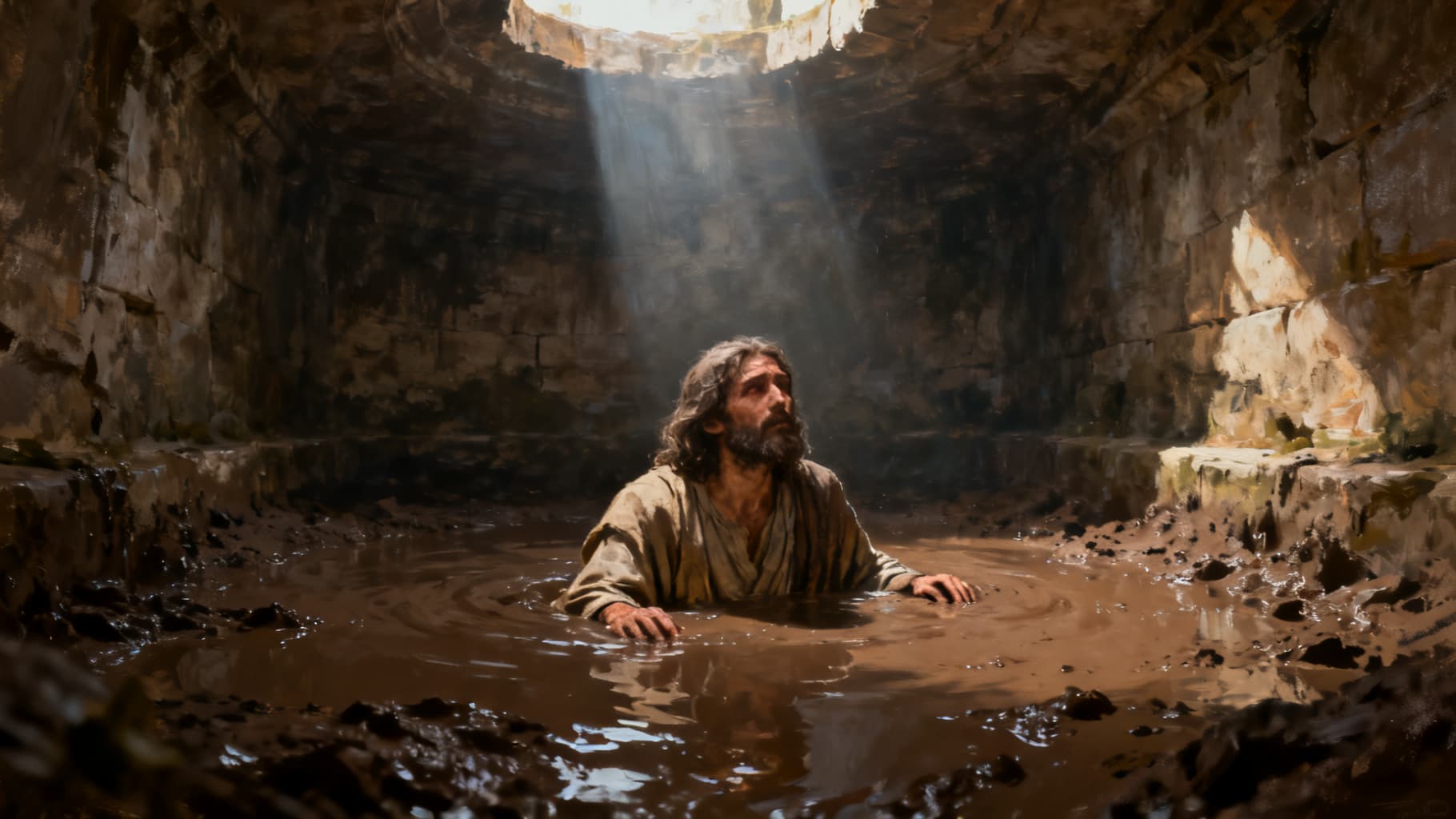
Jerusalem is in its final days, Babylon is closing in, and the prophet Jeremiah keeps saying the one thing the leadership cannot bear to hear — that the city will fall and surrender is the way to live. So the officials persuade a weak King Zedekiah to hand Jeremiah over, and they lower him into a cistern, leaving him to sink in the mud and die. It is a portrait of national leadership at its most corrupt: silencing the truth-teller rather than facing the truth.
Into this moral vacuum steps the unlikeliest figure in the account. Scripture names him plainly as Ebed-Melech the Cushite — a Black African, a man from the region of the upper Nile, serving as an official in the royal house. He is the foreigner in a story about Judah’s judgment, and he is the only person who acts with conscience. The text wants us to notice that the moral hero is not one of Judah’s own leaders but the African in their midst.
His courage is not reckless; it is deliberate. He leaves his post, goes to the king at the Benjamin Gate, and speaks against powerful men who have just demonstrated exactly how they treat those who cross them. “My lord the king,” he says, “these men have acted wickedly in all they have done to Jeremiah the prophet.” To advocate openly for the unjustly condemned, knowing it could cost him everything, is one of the cleanest pictures of moral courage in the Old Testament.
Then comes a detail too tender to be accidental. Granted thirty men and permission to act, Ebed-Melech goes to a storeroom, gathers old rags and worn-out clothes, and lowers them by rope into the pit, calling down, “Put these under your arms to pad the ropes.” He has thought about the prophet’s torn shoulders and aching body, not merely the logistics of extraction. His justice is not abstract; it bends down into the mud and cares about how a suffering man feels. Right action and gentle wisdom belong together.
What happens next is, for the African reader of Scripture, one of the most striking promises in the prophets. While the siege still rages, the Lord sends a personal word to Ebed-Melech: he will not be handed over to the men he fears; he will escape with his life “because you trusted in me” (Jeremiah 39:15–18). God interrupts the unfolding catastrophe to single out a Cushite official by name and guarantee his rescue.
Consider the reversal. The prophet of Judah needed rescuing; the African foreigner did the rescuing. The covenant people’s leaders earned judgment; the outsider earned a divine promise of deliverance. This is not incidental color in the text — it is part of how Scripture consistently honors the African presence among God’s people, and how God measures a person by faith and faithfulness rather than by nation or status.
For us, Ebed-Melech is a quiet rebuke and an invitation. He had a position and he spent it on someone who could not repay him. He saw an injustice that everyone else had agreed to ignore, and he refused the safety of silence. And the God who seemed occupied with the fall of nations was, the whole time, keeping precise account of one man’s courage. That is the kind of courage God remembers.
The Big Idea
Spend whatever influence you have on the vulnerable, act against injustice even when the powerful are watching, and do it with tenderness — because the God who governs nations also remembers, by name, the quiet courage the world overlooks.
Reflect & Discuss
- 1.Ebed-Melech, the African outsider, was the only one with the conscience to act — where have you let position or belonging keep you from doing right?
- 2.Whose ‘cistern’ are you aware of right now, and what would it cost you to speak to the people with power to help?
- 3.The rags under the arms show justice joined to gentleness — where is your care for others efficient but not tender?
- 4.How does God’s personal promise to a Cushite official reshape what you believe about who He sees and remembers?
A Prayer
Father, You remembered Ebed-Melech by name when nations were falling, and You see the courage no one else applauds. Give me his conscience — to refuse the safety of silence, to spend my influence on those who can’t repay me, and to help with real gentleness. Where doing right will cost me, make me brave, and let me trust You as he did. Amen.
Talk It Through
Chat about Ebed-Melech Rescues Jeremiah and receive Scripture-based encouragement rooted in this story.
Ask anything about this story to get started.
This AI guide offers encouragement, not counseling, and can make mistakes, so always test what you read against Scripture.
Emergency: call 911, or call/text 988.
Journey Through the Bible
Stop 41 of 83
Up next: Courage for the Moment You’re In
The same story, told for…