
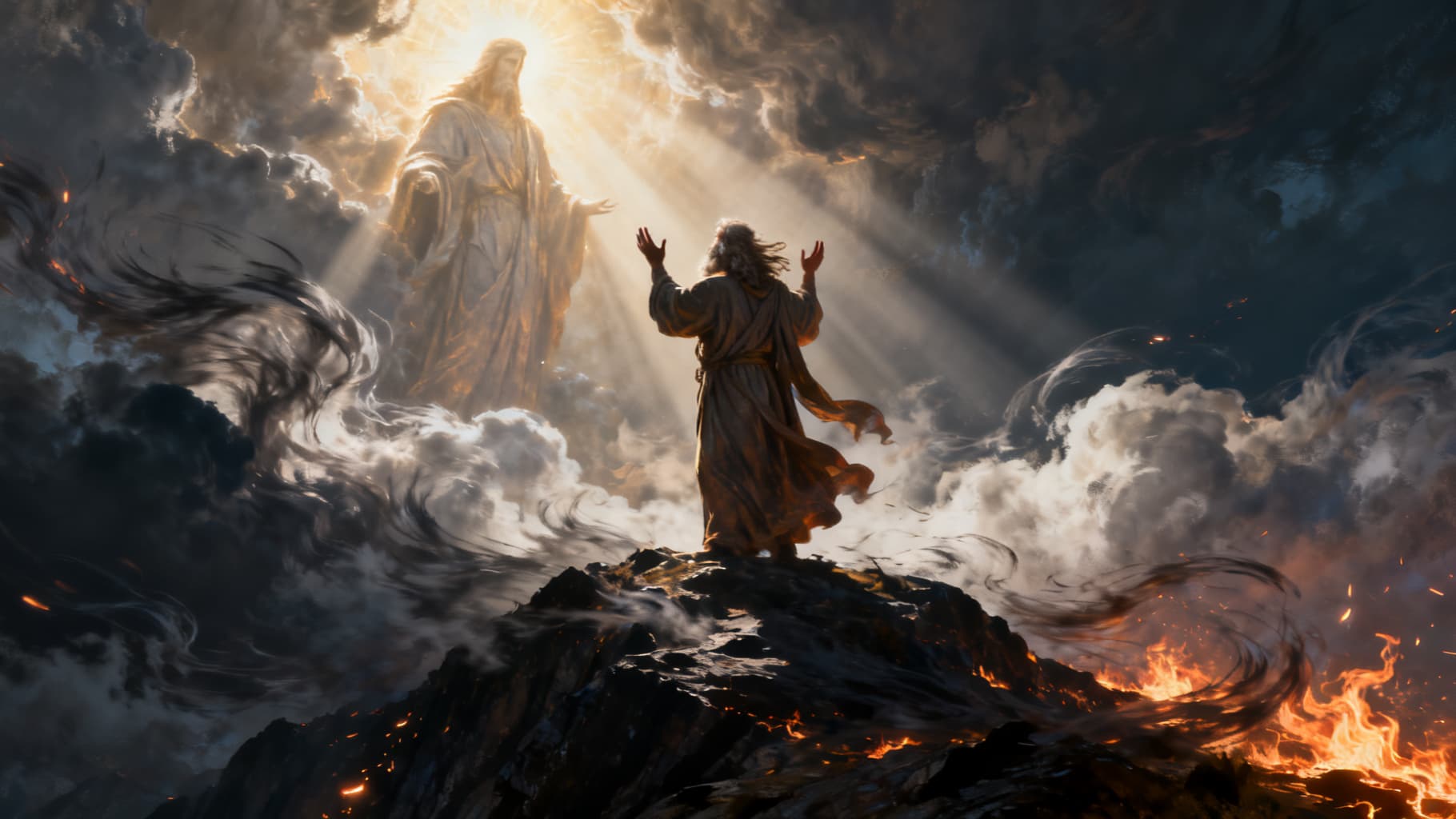
“Whoever is for the Lord, come to me.”
— Exodus 32:26 (NIV)
The timing is what indicts them. The cloud is still on the mountain; the covenant is barely six weeks old; the words “you shall have no other gods before me” are still ringing in the air. And it is precisely here — at the height of revelation, with God closer than He has ever been — that Israel manufactures a god of gold. The sin is not the failure of people who had never seen grace. It is the failure of people who had seen nothing else.
What undoes them is delay. Moses tarries on the mountain, and the absence of the visible mediator becomes unbearable. “We do not know what has become of him.” Notice how little it takes: not persecution, not famine, just the silence of waiting. The heart cannot abide an unseen God for long; it craves something it can point to, something on its own timeline, something it can manage. Idolatry is very often impatience with God’s pace, dressed up as worship.
John Calvin called the human heart a perpetual idol factory, and Exodus 32 is the factory floor. The machinery is always running. We do not usually choose between God and nothing; we choose between God and a substitute — and the most dangerous substitutes are not vices but good things lifted into the place of ultimate things. Aaron’s calf is even branded with God’s own rescue: “These are your gods who brought you out of Egypt.” That is the subtlety of idolatry — it rarely denies the truth outright; it relocates worship onto something that cannot bear the weight.
Aaron’s role is its own quiet horror. The high priest, the man set apart to guard worship, simply yields to the crowd, gathers the gold, and shapes the very thing he should have refused. His later excuse — “I threw it into the fire, and out came this calf” — is the eternal language of evasion, sin pretending it merely happened. Leadership that only mirrors the people’s appetites is no leadership at all.
Then comes the hinge of the chapter, and it is not the calf but the intercession. God proposes to consume the people and make a great nation of Moses alone, and Moses refuses the offer. He stands between the wrath and the guilty and pleads — on God’s reputation, on God’s promises, even offering to be blotted out himself in their place. He does not minimize the sin; he comes down and shatters the tablets, and a costly, sobering reckoning follows. Holiness is not sentimental. But the man on the mountain has already stood in the gap for people who had no claim on mercy.
And that is where the chapter strains toward the Gospel. Moses is the mediator who pleads for sinners and even offers his own life — and yet Moses cannot finally be blotted out for them; the substitution is offered but incomplete. The text leaves a Mediator-shaped hollow that only Christ fills: the One who does not merely plead in the gap but stands in it, bearing the judgment Himself, our great High Priest who actually takes the place He offers.
What should astonish us is that the story does not end in the consuming fire. God renews the covenant; He gives the tablets again; He keeps leading a people who, weeks into the relationship, had already betrayed it. That is not God being lax about sin — the reckoning was real — but God being faithful beyond their faithlessness. Grace after grievous failure is the deepest note Exodus 32 sounds, and it is the note our own idol factories most need to hear.
The Big Idea
The heart is a perpetual idol factory, and impatience with God’s timing is one of its busiest production lines — we manufacture manageable substitutes the moment God feels slow or unseen. Our hope is not our steadiness but a Mediator who stands in the gap: Christ, who bears the judgment we earned and leads us still, faithful beyond our faithlessness.
Reflect & Discuss
- 1.Which good thing in your life are you most tempted to lift into the place of ultimate things — to ask of it what only God can give?
- 2.Where is impatience with God’s timing quietly manufacturing a substitute you can see and control?
- 3.Like Aaron, where do you let the pressure of the crowd shape what you should have guarded?
- 4.What does it change for you that Christ does not merely plead in the gap but stands in it, bearing the judgment Himself?
A Prayer
Lord, You know how quickly my heart turns out idols — how readily impatience with Your timing becomes a god I can manage. Forgive me for crediting Your gifts to lesser things and for following the crowd where I should have stood. Thank You for Christ, my Mediator, who does not merely plead in the gap but stands in it and bears what I deserve. Be faithful beyond my faithlessness, and lead me still. Amen.
Talk It Through
Chat about The Golden Calf and receive Scripture-based encouragement rooted in this story.
Ask anything about this story to get started.
This AI guide offers encouragement, not counseling, and can make mistakes, so always test what you read against Scripture.
Emergency: call 911, or call/text 988.
Journey Through the Bible
Stop 17 of 83
Up next: The Rest They Could Not Enter
The same story, told for…