
“The virgin will conceive and give birth to a son, and they will call him Immanuel” (which means “God with us”).
— Matthew 1:23 (NIV)
The birth narratives are so familiar that we can miss how staggering the claim is. The eternal God — uncreated, unbounded, the One who spoke galaxies into being — entered His own creation as a human embryo, then a newborn dependent on a teenage mother for milk and warmth. Matthew names the mystery in a single word: Immanuel, “God with us.” This is the hinge of the Christian faith, the moment the Word became flesh.
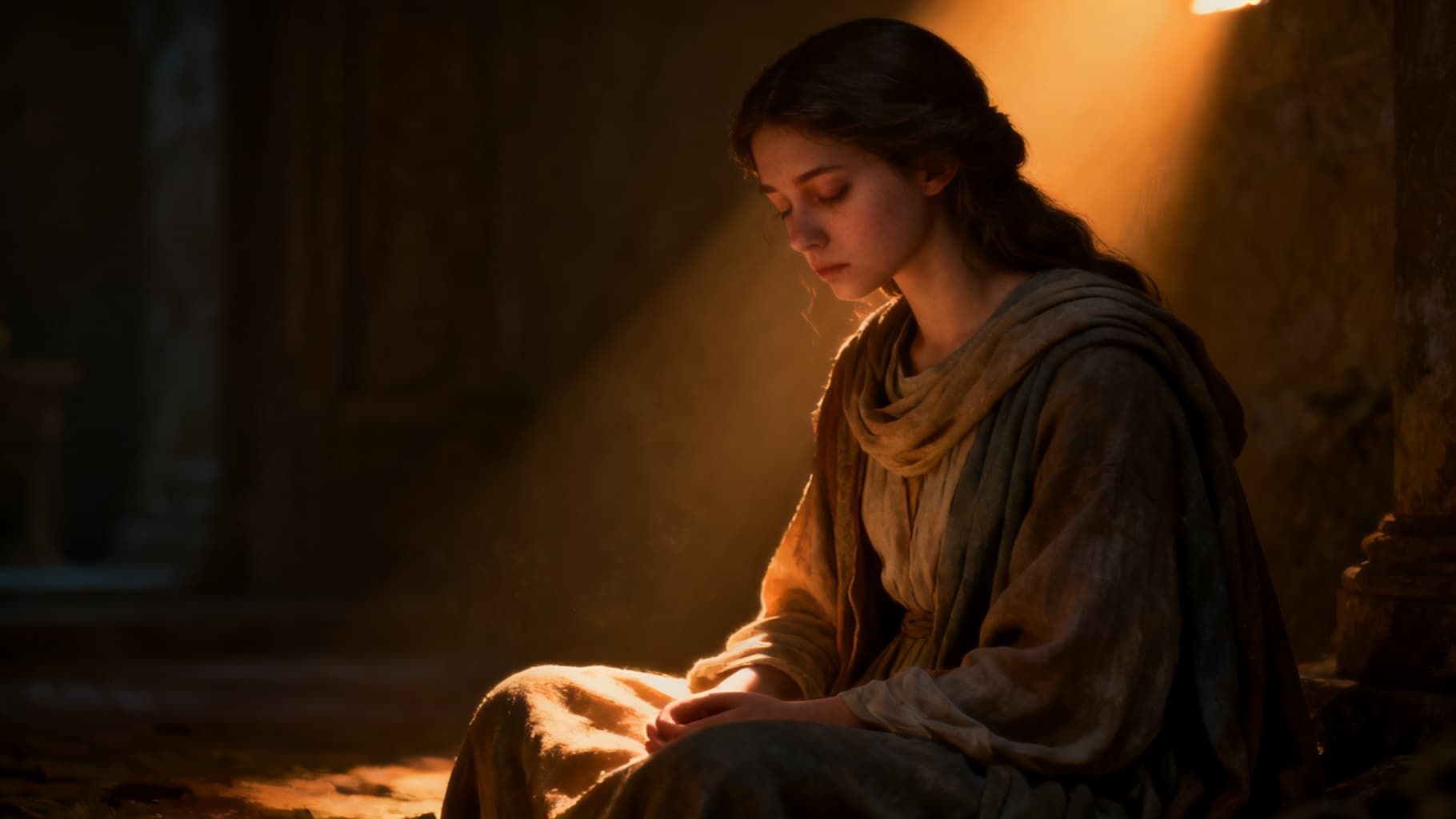
Consider Mary’s faith. A young woman in an obscure town is told she will bear the Messiah, and her consent — “I am the Lord’s servant; may your word to me be fulfilled” — carries real risk: shame, suspicion, the threatened loss of Joseph. Her yes is a model of faith that obeys before it understands, that entrusts its reputation and future to God’s word over its own ability to see how things will resolve.
Then there is the deliberate humility of the setting. The God who could have arrived in glory and terror chose a backwater town, a borrowed space among the animals, and a feeding trough for a crib. The first witnesses were shepherds — ritually unclean, socially low, the night-shift workers of the ancient world. From its first hours, the gospel announces that God is drawn to the lowly and that His power is most clearly displayed in apparent weakness.
The shepherds matter theologically, not just sentimentally. The announcement of the Savior’s birth comes first not to priests or kings but to laborers in a field, and the angel calls it “good news of great joy for all the people.” The incarnation refuses every hierarchy we build around access to God; in Christ, God comes near to everyone, beginning with those the world overlooks.
We should also feel the darkness this birth entered. This was an occupied people under heavy taxation, a world of Roman power, infant mortality, and — soon — Herod’s murderous fear. The Light did not come into a world already at peace. It came into a world in the dark, which is precisely why John can write that “the light shines in the darkness, and the darkness has not overcome it.” Christmas is hope arriving where hope was scarce.
And the incarnation is not merely a beautiful beginning; it sets the trajectory of everything that follows. The God who would stoop to a manger is the God who would stoop to a cross. The humility of Bethlehem and the humility of Calvary are the same self-giving love — God refusing to remain distant, willing to be vulnerable, choosing to be with us all the way down.
So for those of us long past the wonder of childhood Christmases, the invitation is to recover the scandal and the comfort of Immanuel: that God is not a remote principle to be reasoned about but a Presence who came near, who knows our flesh from the inside, and who meets us still in the humble, ordinary, and overlooked places of our lives. The proper response is Mary’s — to make room, to say yes, and to worship.
The Big Idea
The incarnation means God is not far off but “with us” — He came in humility, into the dark, to the lowly and overlooked. Like Mary, make room for Him, trust before you fully understand, and worship the God who chose to come near.
Reflect & Discuss
- 1.What does it change for you to believe that God came near — “God with us” — rather than staying distant?
- 2.Mary trusted God before she could see how it would resolve; where is He asking that of you?
- 3.Why does God so consistently choose the humble and overlooked, and how does that confront the hierarchies you live by?
- 4.Into what darkness in your own life or world do you most need the news that the Light has come?
A Prayer
Father, I confess I often picture You as far off. Thank You that in Jesus You came near — Immanuel, God with us — born in humility, into a dark and broken world. Teach me Mary’s faith to trust before I understand, and to make room for You in the small and overlooked places of my life. I worship You for coming close. Amen.
Talk It Through
Chat about The Birth of Jesus and receive Scripture-based encouragement rooted in this story.
Ask anything about this story to get started.
This AI guide offers encouragement, not counseling, and can make mistakes, so always test what you read against Scripture.
Emergency: call 911, or call/text 988.
Journey Through the Bible
Stop 50 of 83
Up next: The Refugee Messiah
The same story, told for…