
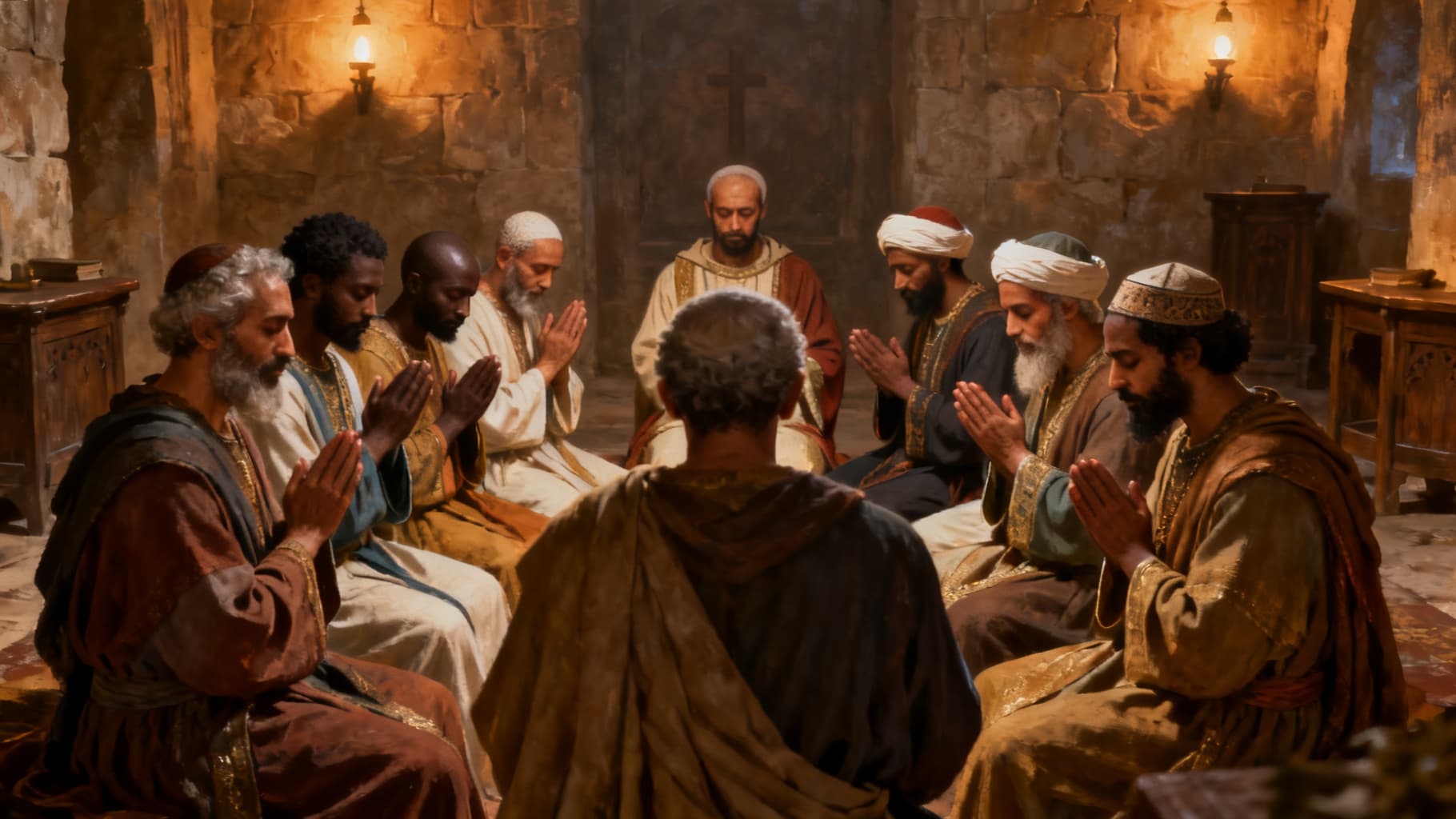
“While they were worshiping the Lord and fasting, the Holy Spirit said, ‘Set apart for me Barnabas and Saul for the work to which I have called them.’”
— Acts 13:2 (NIV)
Antioch was the third-largest city of the Roman Empire — a cosmopolitan crossroads where Greeks, Romans, Syrians, Jews, and North Africans lived layered together. When the gospel arrived, persecution had scattered believers there, and for the first time the message moved decisively beyond a single ethnic community. The result was not a watered-down faith but the prototype of the multi-ethnic church.
We should be precise about its leadership, because Luke is. Acts 13:1 names the prophets and teachers at Antioch: “Barnabas, Simeon called Niger, Lucius of Cyrene, Manaen… and Saul.” Read plainly, this is a multiracial leadership team. “Niger” means “black,” and Lucius is explicitly from Cyrene, in North Africa. African believers were not at the margins of this church; they were among those teaching and leading it.
This matters for how we tell the story of the early church. The faith did not spread as a European export later carried back to Africa; from the beginning it was held and led by African believers, in one of its founding congregations. Recovering names like Simeon called Niger and Lucius of Cyrene is not revisionism — it is reading the text as written.
It was in this church, of all places, that “the disciples were called Christians first at Antioch.” The name we still carry was coined by outsiders watching a community where Jew and Gentile, African and Asian and European, lived a shared identity in Christ. The watching world named them after Jesus precisely because what united them was no longer ethnicity but Him.
Notice, too, what this diverse leadership was doing when God moved: “while they were worshiping the Lord and fasting,” the Spirit set apart Barnabas and Saul for mission. The first deliberate sending of cross-cultural missionaries came not from a homogeneous body but from a multiracial leadership team on its knees together. Diversity and mission were not in tension; one launched the other.
This reframes how we should hold diversity in the church today. Antioch tells us that a multi-ethnic congregation, with shared leadership across racial lines, is not a modern concession to culture or a diversity initiative bolted onto the gospel. It is closer to the original design — a foretaste of the “every nation, tribe, people and language” gathered around the throne in Revelation.
For a congregation that intentionally recovers the multi-ethnic, African-led leadership of the early church, Antioch is not an illustration; it is a charter. It calls us to worship together across every line, to share leadership genuinely rather than symbolically, and to let our unity in Christ be so visible that, as in Antioch, the world has to find a new name for what it sees.
The Big Idea
Antioch is the prototype multi-ethnic church — led by named African and other believers worshiping and sending together, where disciples were first called Christians. Diversity is God’s design, not a concession; pursue it in worship, in leadership, and in mission.
Reflect & Discuss
- 1.Does your picture of the early church include its named African leaders — Simeon called Niger and Lucius of Cyrene — and how should that reshape it?
- 2.Is diversity in your church a value you affirm, or is it actually shared at the level of leadership and decision-making?
- 3.Antioch’s diversity launched its mission. Where might your unity across lines be meant to send you outward?
- 4.What would it take for the watching world to need a ‘new name’ for what it sees in your community?
A Prayer
Father, You designed Your church to be diverse from its very foundation, led by believers from many lands — including the African leaders of Antioch. Forgive us where we have settled for sameness or for diversity in name only. Knit us together across every line, give us shared leadership and shared worship, and send us out, as You sent Antioch, for the sake of the world. Amen.
Talk It Through
Chat about The Church at Antioch and receive Scripture-based encouragement rooted in this story.
Ask anything about this story to get started.
This AI guide offers encouragement, not counseling, and can make mistakes, so always test what you read against Scripture.
Emergency: call 911, or call/text 988.
Journey Through the Bible
Stop 81 of 83
The same story, told for…