
The First Easter
The Hope That Changes Everything
Luke 23 · Luke 24 · John 19 · John 20
“He is not here; he has risen, just as he said.”
— Luke 24:6 (NIV)
At the center of the Christian faith stands an event that is either the greatest hope ever offered or the cruelest illusion ever believed: a crucified teacher, dead and buried, walking out of his own tomb. The earliest Christians did not stake their lives on a metaphor. They claimed it actually happened, in history, outside Jerusalem, on a specific weekend that split time in two.
Begin with the cross. The Gospels describe the crucifixion soberly, without sensationalism, because the horror was never the point — the meaning was. Jesus, the only truly innocent man, dies in the place of the guilty. This is what theologians call substitution: He takes the judgment our sin deserved so that we might receive a forgiveness we could never earn. “It is finished” is not collapse but completion — a debt fully paid.
Consider what that costs God. The cross is not an angry deity demanding blood from a reluctant victim; it is the eternal Son, in perfect agreement with the Father, absorbing the consequences of human evil into Himself out of love. The deepest wound of the universe becomes the place where mercy and justice meet without compromising either.
Then comes the silence of Saturday — the day the followers of Jesus lived in the grief that every bereaved person knows, the grief of a hope that seems permanently buried. It is worth remembering that resurrection morning was preceded by an ordinary, unbearable day of loss. God is not absent in our Saturdays.
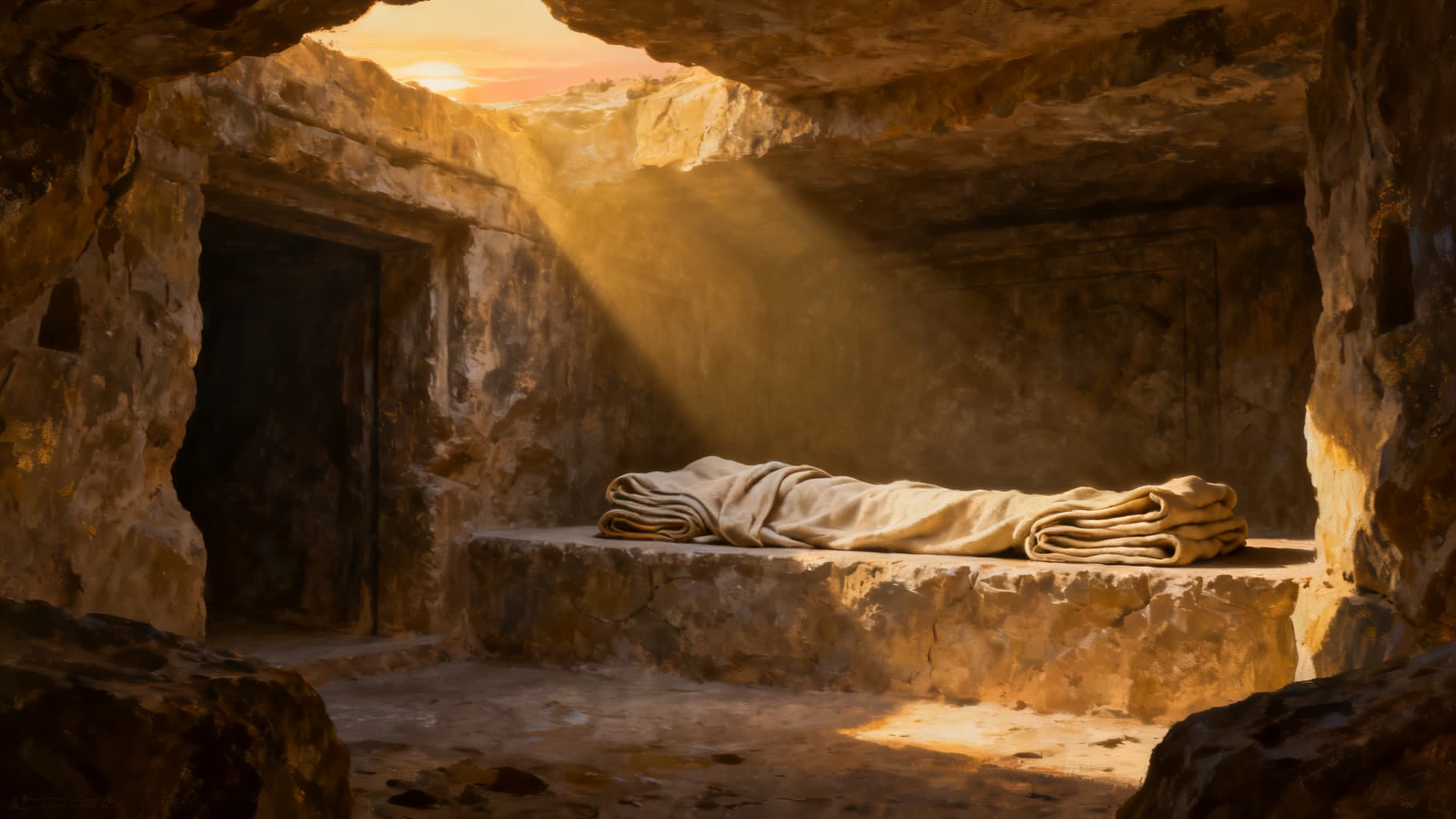
And then, Sunday. The tomb is empty, the grave clothes are left behind, and across the following weeks more than five hundred people claim to have seen, touched, and eaten with the risen Christ. The historical case is not trivial: the embarrassing detail that women were the first witnesses, the transformation of terrified disciples into martyrs, the explosive birth of the church — all demand an explanation, and the explanation the witnesses gave was simply, “He is risen.”
The resurrection is the Father’s public verdict on the cross — His declaration that the sacrifice was accepted and that death itself has been defeated. If Christ is raised, then sin no longer condemns, the grave no longer wins, and the deepest fear of every human heart has been answered. This is not optimism; it is a victory already won that reorders everything we thought we knew about our own mortality.
Which leaves each of us with an invitation rather than merely a fact. The empty tomb offers new life — not just life after death, but a different quality of life now: forgiven, unafraid, and anchored to a hope that the world cannot give or take away. The same power that raised Jesus is offered to raise us, too, out of whatever has held us in death.
The Big Idea
On the cross Jesus took our judgment in love; in the empty tomb God declared death defeated. The resurrection is not wishful thinking but a victory you are invited to enter — new life, real forgiveness, and a hope no grave can hold.
Reflect & Discuss
- 1.Do you relate to the cross mainly as a tragic example, or as a substitution made personally for you — and what difference would the second make?
- 2.Where in your life are you living in ‘Saturday,’ a hope that feels buried, and what would it mean to trust that God is present even there?
- 3.What honestly persuades or unsettles you about the historical claim of the resurrection?
- 4.If death has truly been defeated, what fear in your life would loosen its grip?
A Prayer
Father, I cannot fully comprehend the love that sent Your Son to the cross in my place, or the power that raised Him from the grave. Thank You that the sacrifice was accepted and death is defeated. Where I am living in fear or buried hope, raise me into new life by the same power that raised Jesus. Amen.
Talk It Through
Chat about The First Easter and receive Scripture-based encouragement rooted in this story.
Ask anything about this story to get started.
This AI guide offers encouragement, not counseling, and can make mistakes, so always test what you read against Scripture.
Emergency: call 911, or call/text 988.
Journey Through the Bible
Stop 74 of 83
Up next: Divine Appointments
The same story, told for…