
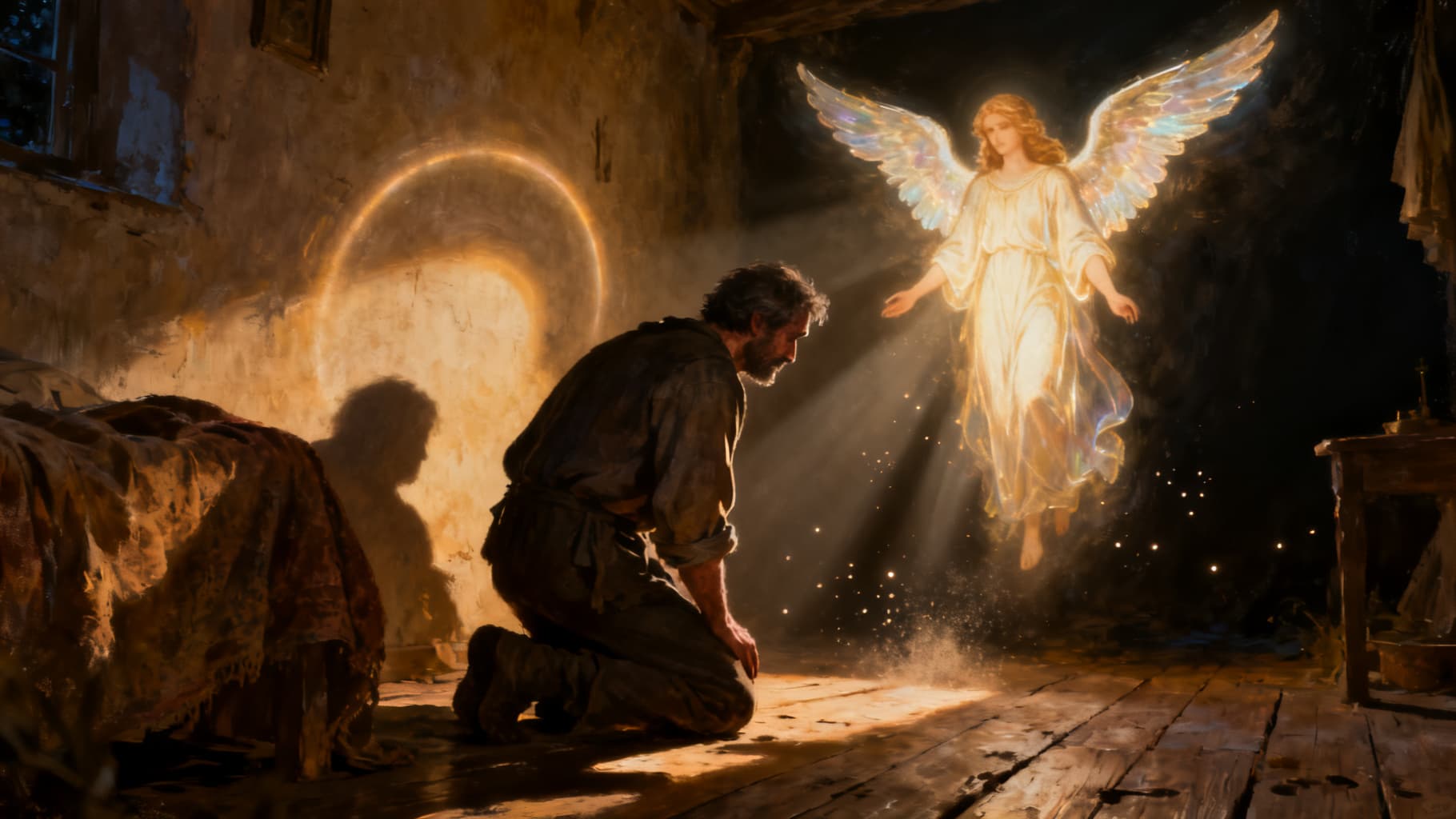
“So he got up, took the child and his mother during the night and left for Egypt, where he stayed until the death of Herod… ‘Out of Egypt I called my son.’”
— Matthew 2:14-15 (NIV)
Within months of the incarnation, the Son of God is a fugitive. Herod, threatened by the rumor of a rival king, will soon slaughter the children of Bethlehem, and the only thing standing between that violence and the Christ child is a carpenter who obeys a dream. The Gospel that announces a King opens with that King fleeing for His life.
We should let the word land plainly: Jesus was a refugee. Not metaphorically — He was an infant carried across a border in the night to escape state violence, dependent on a foreign land for survival. The One who would say “the Son of Man has no place to lay his head” began life without a safe home of His own.
And the land that received Him was Egypt — which is to say, Africa. This is the heart of the story and it deserves to be stated without hedging: the continent of Africa sheltered the Savior of the world. When Judea was lethal, Africa was refuge. The Messiah’s survival is bound up with African soil, and any telling that erases that has lost something the text itself insists on.
Matthew reaches back to Hosea and reads the whole episode through Israel’s story: “Out of Egypt I called my son.” Just as God once drew His people up out of Egypt, He now draws His Son out of Egypt, so that Jesus relives and redeems the nation’s history in His own body. The flight is not a detour from the plan; it is the plan, woven through prophecy and providence.
That providence is quiet and unspectacular. There is no army, no fire from heaven against Herod — only a warning, a willing father, and a long, dangerous road. God’s sovereignty here works through ordinary obedience and the kindness of a sheltering land, which is often exactly how it works in our own upheavals: not by removing the danger, but by guiding us through it.
It also confronts us. Herod is the archetype of power that will destroy the innocent to protect itself, and tyranny like his still produces refugees by the millions. The unsettling truth is that Christ is found among them. To look at the displaced family at the border and feel nothing is to look at the holy family in Matthew 2 and feel nothing.
So the church’s calling is not abstract. We worship a Lord who was carried to safety in Africa as a hunted child, which means compassion for the migrant and the displaced is not politics added onto the gospel — it is fidelity to the gospel. The refugee Messiah asks whether we will be a Herod, a bystander, or an Egypt.
The Big Idea
The Savior was a refugee, sheltered by Africa when His homeland turned deadly. God’s providence carried Him through ordinary obedience — and the church that worships Him is called to be a refuge for the displaced, not a Herod or a bystander.
Reflect & Discuss
- 1.What changes in your faith when you take seriously that Jesus was a refugee?
- 2.Why does it matter that Africa — Egypt — was the land that sheltered the Christ child, and have you let that truth shape how you read the gospel?
- 3.Where do you see God’s providence working quietly through ordinary obedience rather than dramatic rescue in your own life?
- 4.Toward the displaced and the migrant, are you more often a Herod, a bystander, or an Egypt — and what would change you?
A Prayer
Father, You carried Your Son to safety in Africa as a hunted child, and in Egypt You sheltered the Savior of the world. Teach me to trust Your quiet providence in my own upheavals, and to see Christ in every family forced to flee. Make Your church a refuge — never a Herod, never a bystander — for the displaced. Out of Egypt You called Your Son; call us, too, into compassion. Amen.
Talk It Through
Chat about The Flight to Egypt and receive Scripture-based encouragement rooted in this story.
Ask anything about this story to get started.
This AI guide offers encouragement, not counseling, and can make mistakes, so always test what you read against Scripture.
Emergency: call 911, or call/text 988.
Journey Through the Bible
Stop 51 of 83
Up next: The Math of the Kingdom
The same story, told for…