
Samson, God's Strong Man
When the Lord Has Quietly Left
Judges 13 · Judges 14 · Judges 15 · Judges 16
“Sovereign Lord, remember me. Please, God, strengthen me just once more.”
— Judges 16:28 (NIV)
Few biblical lives are framed with such promise and squandered with such waste as Samson’s. An angel announces his birth to a barren woman; he is set apart from the womb as a Nazirite — his uncut hair the visible sign of a life consecrated to God — and granted strength to begin delivering Israel from the Philistines. Everything about his beginning signals a man marked by grace for a purpose larger than himself.
Yet the tragedy of Samson is that his gifting consistently outran his character. The Spirit comes upon him in power, but the man underneath is ruled by appetite, vanity, and impulse. He toys with his vows, breaks his consecration when it suits him, and treats his calling as a personal possession to be enjoyed rather than a stewardship to be guarded. He is the perennial warning that anointing is not the same as holiness, and that God can use a person far beyond the condition of their soul.
His undoing is not a single catastrophic sin but a long, almost imperceptible erosion. Each compromise lowers the threshold for the next. By the time Delilah’s persistence wears him down and he surrenders the secret of his consecration, the betrayal is less a turning point than the final installment of a downward drift years in the making. Sin rarely announces itself; it advances by increments small enough to excuse.
Then comes one of Scripture’s most chilling sentences. His hair shorn, Samson rises “as before” and assumes nothing has changed — “but he did not know that the Lord had left him” (Judges 16:20). Here is the deepest peril of a life that presumes upon grace: the presence of God can be forfeited so gradually that one continues to act in His name without realizing He has withdrawn. We can keep the motions, the reputation, the borrowed momentum of past power, while the reality has quietly departed.
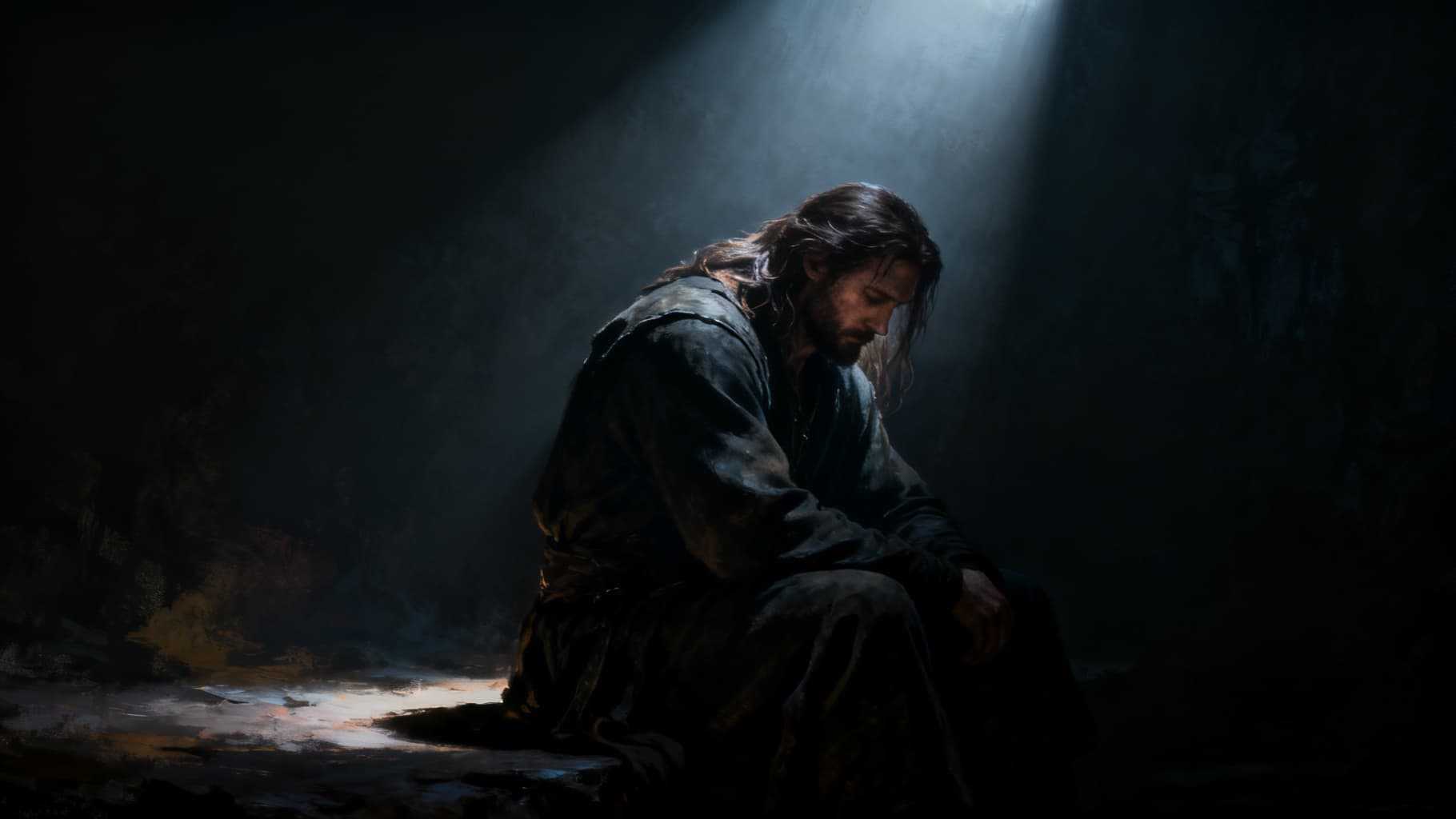
Captured, blinded, and reduced to grinding in a prison, Samson is at last stripped of everything he had trusted instead of God. And it is precisely there, in the ruin of his own making, that the text records a small mercy: “the hair on his head began to grow again.” Restoration begins not with a flourish but in the dark, in the place of consequence, where a humbled man finally has nothing left to presume upon.
His final prayer is the truest moment of his life: “Sovereign Lord, remember me. Please, God, strengthen me just once more.” There is no boasting in it, no self-reliance — only a man casting himself entirely upon the God he had taken for granted. God answers. In his death Samson strikes a greater blow against Israel’s oppressors than in all his life, and the deliverance he was born to begin is, in part, accomplished through his brokenness.
Most astonishing of all, the New Testament names Samson among the heroes of faith in Hebrews 11 — not for his self-control, which he lacked, nor for his wisdom, which he squandered, but because in the end he trusted God. That inclusion is sheer grace. It does not excuse the wreckage of his choices, but it declares that God’s mercy can redeem even a ruined life that finally turns back to Him. The God who remembered Samson at the bottom is the God who remembers us.
The Big Idea
Gifting is not character, and anointing is not intimacy. Samson’s tragedy is that he presumed upon both until he no longer knew the Lord had left him. Yet his last cry — “remember me” — and his place in Hebrews 11’s roll of faith declare that grace can still redeem a wasted life that finally casts itself wholly on God.
Reflect & Discuss
- 1.Where might you be mistaking continued giftedness or success for the abiding presence of God — coasting on past momentum without knowing whether He is still near?
- 2.What small, repeated compromises are quietly eroding your consecration, each one excusable on its own?
- 3.In what areas are you presuming upon grace — treating God’s patience as permission rather than as a call to repent?
- 4.Samson’s truest prayer came at the bottom. What would it look like to pray ‘remember me’ honestly, before circumstances strip you down to it?
A Prayer
Sovereign Lord, search me for the gap between my gifts and my character. Keep me from the slow erosion of small compromises, and guard me from the terror of acting in Your name while You have quietly withdrawn. Where I have presumed upon Your grace, grant me repentance. And like Samson at his lowest, teach me to cast myself wholly upon You — remember me, strengthen me, and let even my brokenness serve Your purposes. Amen.
Talk It Through
Chat about Samson, God's Strong Man and receive Scripture-based encouragement rooted in this story.
Ask anything about this story to get started.
This AI guide offers encouragement, not counseling, and can make mistakes, so always test what you read against Scripture.
Emergency: call 911, or call/text 988.
Journey Through the Bible
Stop 23 of 83
Up next: The Battle Belongs to the Lord
The same story, told for…